

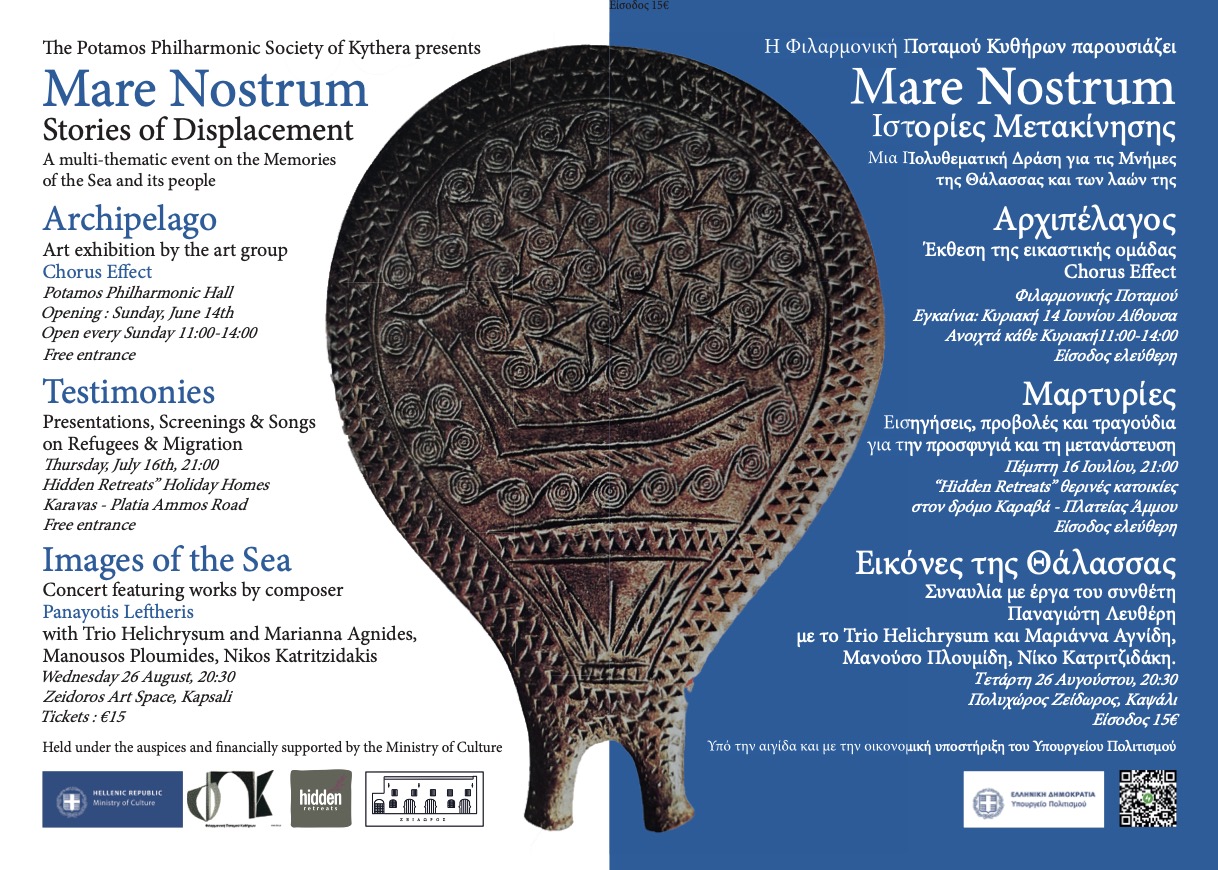
KYTHIRA – The second event of the multi-themed project “Mare Nostrum | Stories of Displacement” (opened on June 14 in Potamos with the exhibition “Archipelago”), by the non-profit “Potamos Philharmonic Society of Kythira” was held on Thursday, July 16th, in the beautiful space of Hidden Retreats on Plateia Ammos.
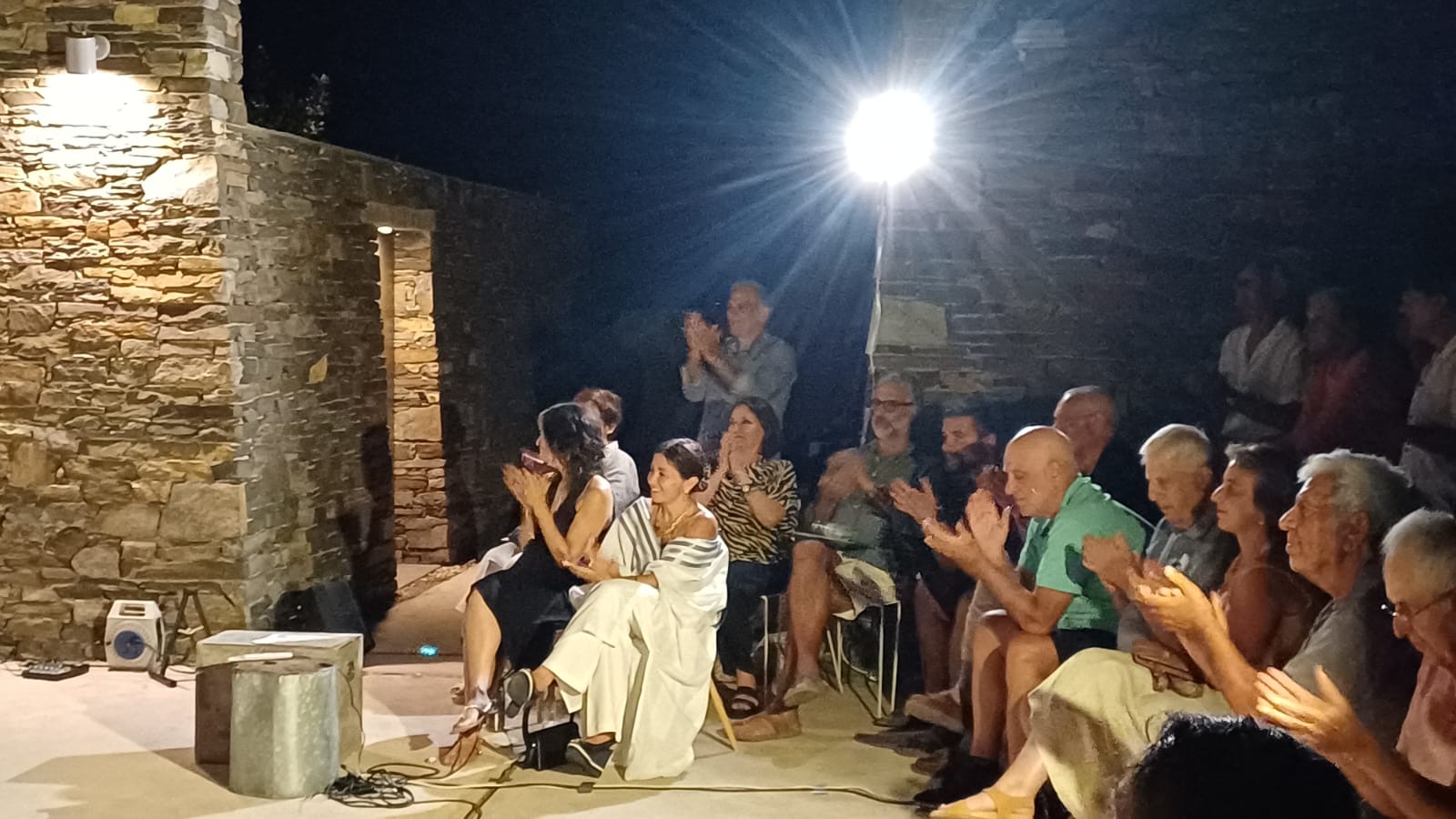
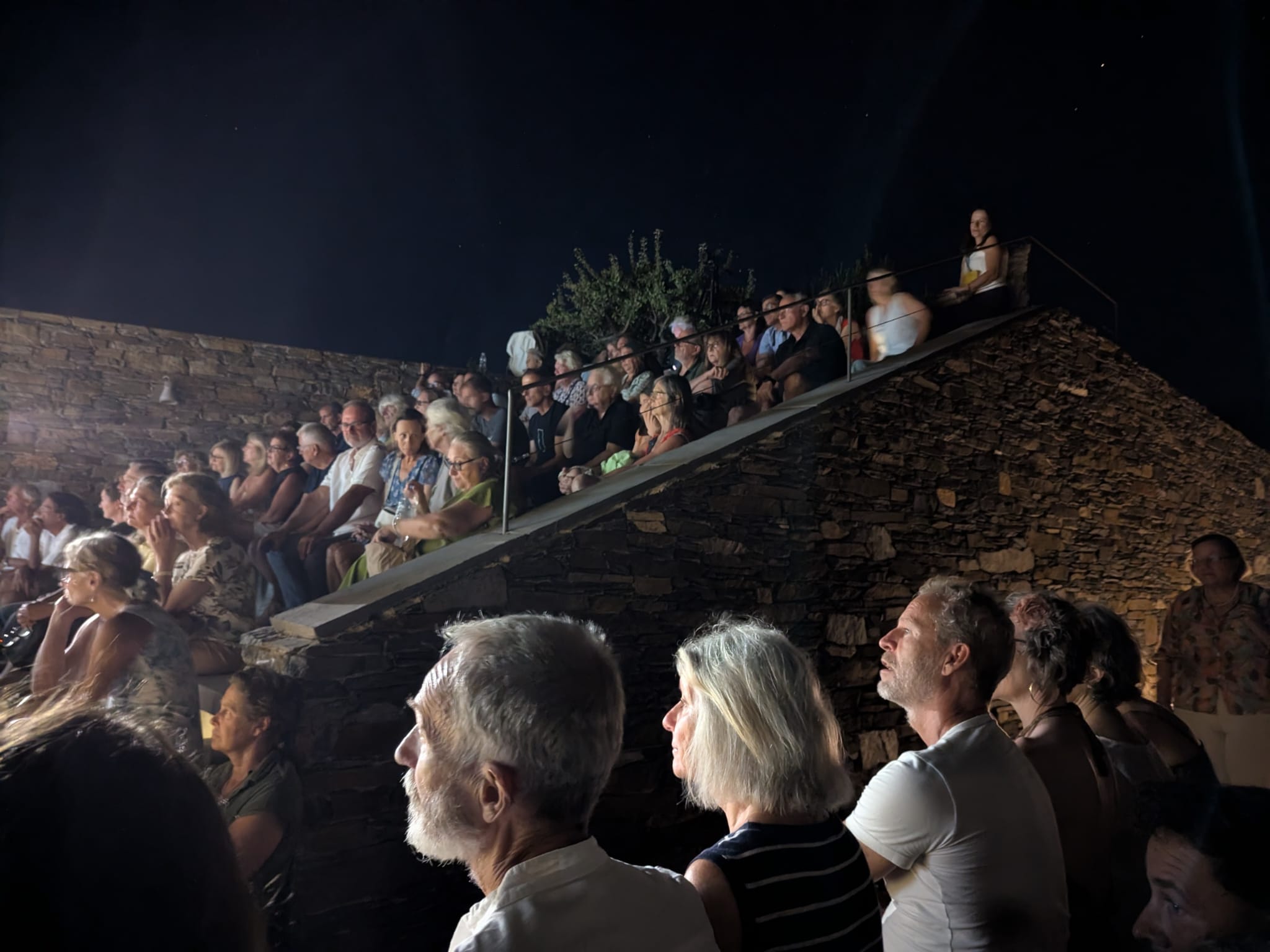
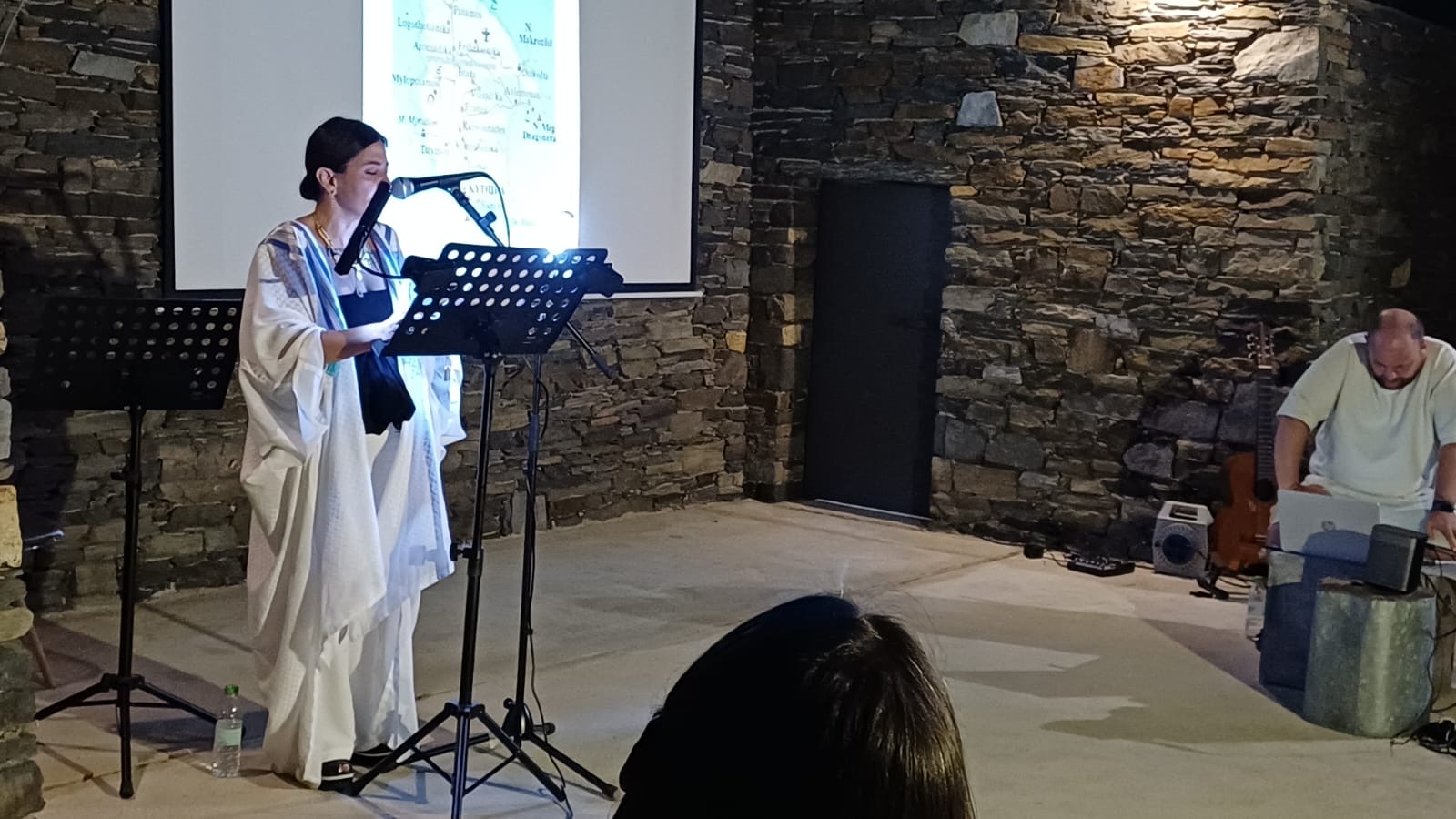
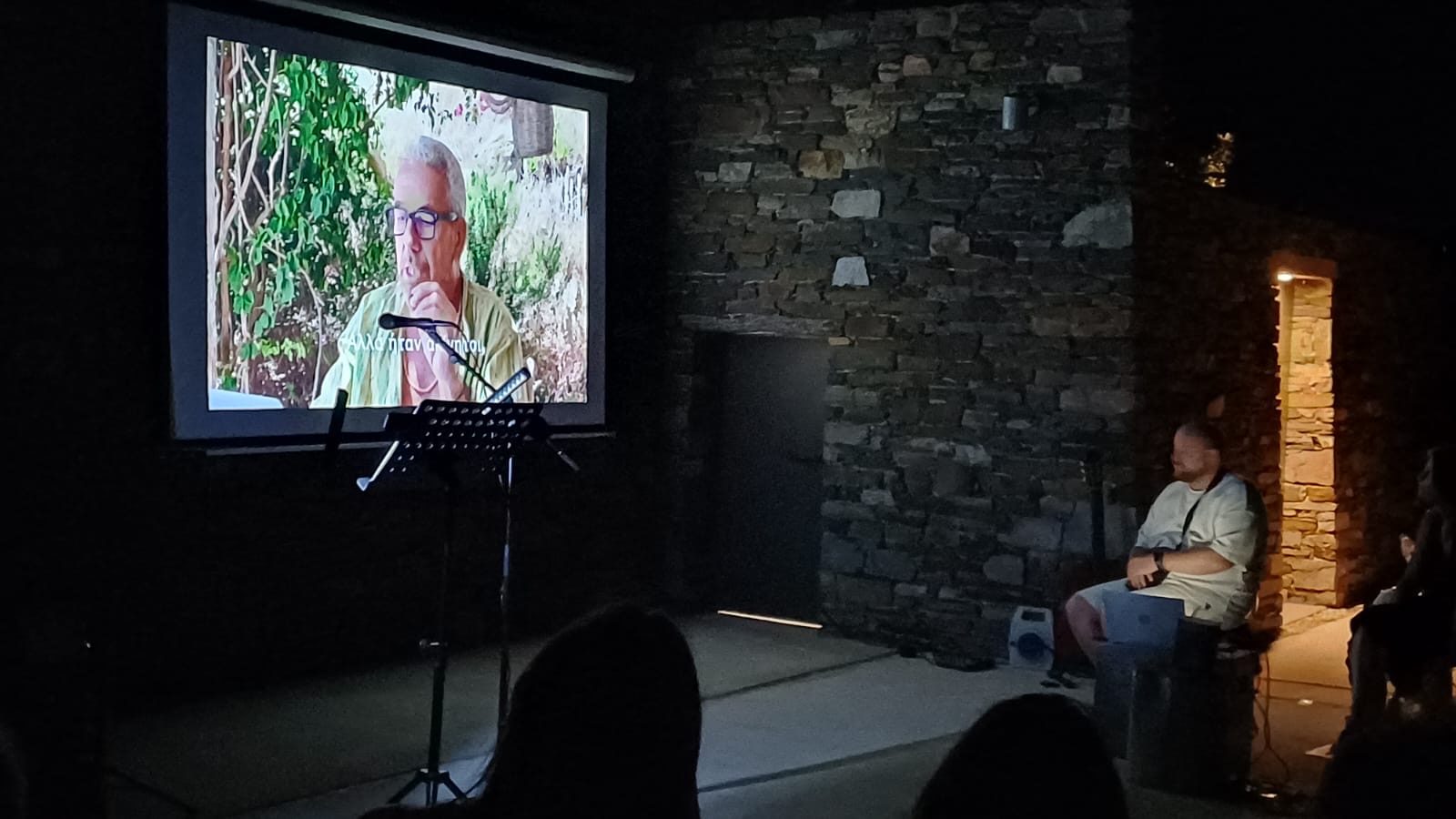
The event is the other evening marked a milestone in the journey undertaken by the project, which received the patronage and support of the Ministry of Culture. A reading of testimonies by Azhar, Masha, Anahid, Eleni, Omar, and Simone —people who now live on Kythira, after being born and living in other places around the world and the Mediterranean— who shared their personal and family stories of migration, relocation, and “other lives.” Each spoke of their own people: “the Palestinians and Armenians uprooted from their land, the Greeks forced to migrate, the Russian Jews who had to find a new home, and the Italians who continue to cross the Mediterranean” as stated in the event program. Two short documentaries on the theme of migration were then screened, one by Yorgos Didimiotis (Didi) and one created by the Kythira High School video team. Finally, the music, with traditional Greek songs on the theme of exile and returning home, performed by musician and singer Chloe Kamberou.
In Greek, the word “nostos” is very specific; it indicates a specific form of return, to one’s home, to one’s roots, as in Odysseus’s Ithaca. Nostos is the root of our italian word nostalgia. A moving meeting, especially for the testimonies of those who revealed their personal stories to a large audience, a tale of disenchantment, lost hopes, and pain, but also of new horizons, new otherness, and renewed energy no longer fleeing but finally ready to build.
Recognizing oneself or recognizing oneself again. What does migration mean? It is not a phenomenon, as many like to say. It is not an exceptional event. People have always migrated, because it is human nature to search for fire, like Prometheus, to go beyond borders, like Ulysses, to seek the Other, like the Argonauts. It is not a phenomenon, therefore; it happens because it has to happen. Where, then, is the error, the crack, the wound? In the motivations. When migration occurs because one is forced, then it becomes expulsive: away from war, away from poverty, away from death that arrives and takes everything. Here is the wound, here is the crack.
The work carried out by the Potamos Philharmonic in Kythira is therefore a great one. A work of educational art, because through artistic storytelling—be it visual, perceptive, or emotional—it triggers a feeling of inner recognition that projects a new, broader gaze outward, ready to grasp in the other’s gaze a word that encompasses everything in Greek: Filoxenia.
The words of a song come back:
(…) Since then I haven’t seen her again
What will become of my city
I’ve seen the world and I wonder if
I’d be the same if I were still there
I don’t know why I think of you tonight
Flowering street of youth
How I wish I were a tree that knows
Where it is born and where it will die (…) [1947, Sergio Endrigo]
Read the testimonies of Azhar Hashem and Simone Perotti.
Watch the documentary film by Yorgos Didimiotis screened during the evening.
Read about the Mare Nostrum project and related events



Leave A Comment